The high street in East Ham, like many others in Britain, had lost much of its historic bustle. As recently as a few years ago, Paul could remember having to shove his way through market day crowds; now, even on a Saturday, the traffic could best be described as “brisk.”
East Ham was amongst the poorest areas in London, which also made it—comparatively—one of the cheapest places to live; bookies, vape shops, and money wire services crowded in next to halal markets, family-owned restaurants, and charity shops. Paul turned off the high street into a residential area, where row upon row of Edwardian terraced houses had been plastered or painted or pebble-dashed over the years to distinguish each from its neighbours; in most cases the paint was peeling, plaster coming off the walls in chunks. A few kids rode past him on their bikes, hoods up and heads down to keep off the cold January drizzle, laughing brightly and calling out to each other.
The locksmith’s shop was one amongst several, sharing the row with a local lettings agency and an off-license. It had closed down when the proprietor died, and the steel shutter over the shop’s front window was now permanently shut. Easily half the shopfronts on the street were also vacant; a property developer had bought up the whole block a few months back, and was now waiting for the remaining leases to expire.
A cable had been spliced into the power lines overhead, running through one of the open windows above the shop.
Paul sidled up to a door alongside the shutter; it was unlocked, and he eased it open. The stairwell beyond brought him up to the sitting room of a flat on the upper floor. The overhead lights were all dark; instead, the space was illuminated by a tall floor lamp plugged into a power strip, connected to the line coming in through the window. There were a few other appliances hooked up to the same strip: a waist-high fridge that had been dragged out of the kitchen, and a hot plate sitting atop the coffee table. Several cases of bottled water were stacked on the floor.
Aaron and Hunter Beddington were twins. Both of them had shot up to nearly six feet tall within the past year, and their lanky frames hadn’t yet filled out to match; they reminded Paul of nothing so much as puppies with big paws, dressed in track pants and thick hoodies to ward off the chill of the unheated flat.
“All right,” Paul said. “The fuck did you do this time?”
“It was just a tanning place,” Aaron replied, immediately defensive. “Twigdick’s shagging one of the girls there. Told us ain’t nobody allowed to do bank runs except the boss.”
“She’s on holiday,” Hunter added, more subdued than his brother.
“Right, so we reckoned they had loads of cash stacked up,” Aaron went on. “We wasn’t expecting this.”
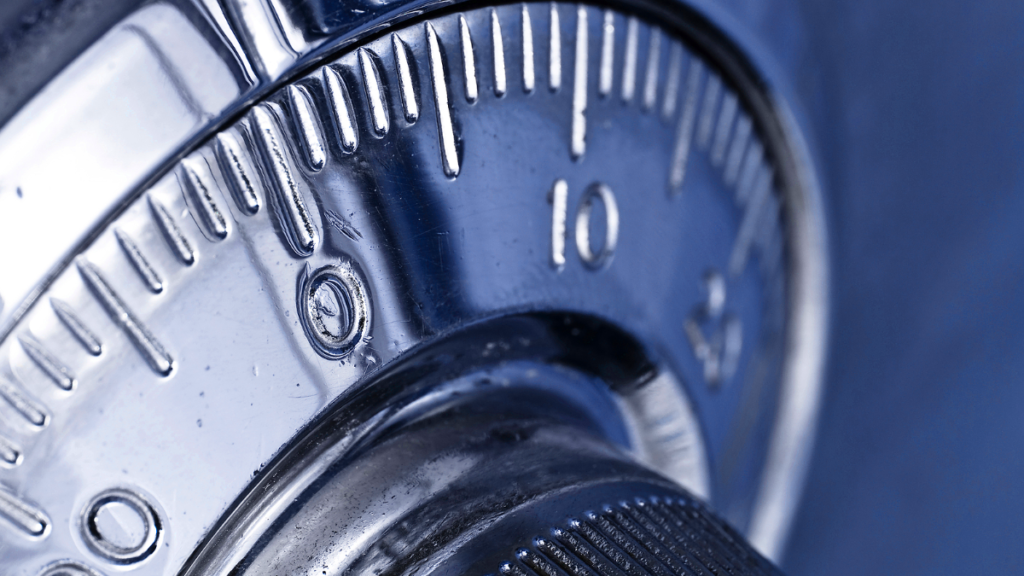
“This” turned out to be a battered hunk of metal that had once been a safe. Paul crouched and opened it, taking a moment to examine the contents.
Finally, he said, “Fuck.”
Sebastian couldn’t recall what occasion the cocktail party was meant to celebrate. It never seemed to matter all that much.
The ballroom was packed with peers of the realm, high-level civil servants, and executives whose companies did the bulk of their business with the government—all of them quite tipsy by this point in the evening, laughing and enjoying each other’s illustrious company. The only people here who actually cleaned their own toilets were the catering staff, going largely ignored as they shuttled trays of drinks and hors d’oeuvres around the room.
Sebastian had seen a few nature documentaries in which schools of fish, moving as if with one mind, dodged and darted away every time a shark plunged into their midst. The image stuck in his head as he made the rounds; old acquaintances suddenly found themselves too busy to talk, circles of conversation going awkwardly quiet as he approached.
It couldn’t be a coincidence that job offers from this particular crowd had tailed off over the past few months—specifically, since Sebastian’s arrest following a vicious brawl at the Tankerville Club.
London’s upper crust had whispered behind his back for years, speculating luridly over the long list of classified activities that made up most of his army career. They’d all fawned over him the way they would a prized exotic pet, enamoured with the idea of handsome, dangerous Sebastian Moran—so long as it stayed exactly that. An idea. The moment he’d slammed that dickhead’s face into the bar, the fantasy collapsed into frightening reality.
If he’d attacked the bartender, rather than one of the club’s members, Sebastian had no doubt the whole incident would’ve been cheerfully swept under the rug.
The music and the chatter of pointless conversation closed in on all sides, and the heat of too many bodies in one space quickly turned suffocating. Sebastian needed a smoke. Slipping outside as subtly as he could, he paused on the pavement outside the venue’s front doors to clear the expensive perfume and champagne fumes from his lungs. He fished a packet of cigarettes from his pocket and lit one.
As Sebastian took a long, slow drag, there was a muffled ping from inside his jacket. He dug out his phone; a new text had come in from Jay.
Still at that party?
Sebastian fumbled one-handed at the keyboard for a moment—then, with a steadying breath and another pull from the cigarette, pressed the “call” button instead and put the phone to his ear.
Jay picked up before the end of the first ring. “Sebastian?”
At the sound of his voice, Sebastian let slip a soft sigh. “What do you need?”
There was a pause. “Are you—?”
“I’m fine,” Sebastian interrupted, insistent. “Just tell me.”
Another pause—longer, this time. Then, Jay said, “John Clay just called. Someone got in touch with him, looking for me.”
“Who?”
“Clay didn’t have a name.”
Sebastian took a quick puff from the cigarette and blew the smoke out through his nose. “This could be a trap.”
“It’s dodgy,” Jay agreed, “but I think if someone wanted me dead, they wouldn’t be politely asking my colleagues about me.”
“Might be the police.”
“Might be,” Jay conceded. “I’ve set up a meeting.”
Without hesitation, Sebastian said, “Where should I meet you?”
Jay had arranged for Clay’s mystery contact to meet him at about nine, in Primrose Hill Park.
Moran joined him a few minutes before the hour, near the park’s northern entrance; he was still in the suit he’d worn to the party, although he’d removed his tie at some point during the evening. He walked briskly, as if trying to burn something off, and his shoulders were stiff, hands jammed firmly into the pockets of his wool coat.
When he spotted Jay, a little of the tension he was carrying eased. “Hey,” he said, and bent to kiss Jay.
The kiss was too hungry, lingered too long, for something meant to be exchanged in public. As Moran pulled back, Jay asked, “Rough night?”
Moran sighed. “Yeah,” he said, and left it at that.
Jay led the way into the park. Their meeting spot was atop the hill from which the park got its name; there was a viewpoint there, dotted with a handful of benches. Jay had plenty of opportunity to observe from a distance as they made their approach. This time of night, the park was sparsely populated; a lone figure sat at one of the benches.
From where they stood further back along the path, Moran asked, “You recognise him?”
“No,” Jay replied, squinting at the man on the bench. “He bring any friends?”
Moran scanned the surrounding lawns; the trees dotted loosely about the park were set well back from the hilltop, and there were few other places to hide. “Doesn’t look like it,” he said. “And if there is anyone else out there, we’ll see them coming.”
Jay continued up the path.
The man on the bench greeted Jay with a nod. “Moriarty,” he said. “Good to see you again.” He was firmly average in both height and build, maybe about forty years old, and carried himself with a calculating sort of patience. The face wasn’t ringing any bells, but the voice was familiar.
“Medway Castle,” Jay recalled. “You were running the crew that robbed the place. ‘Paul,’ wasn’t it?”
The man grinned. “That’s right.”
“Your friend ‘George’ knew John Clay,” Jay went on. “You got in touch with him through her, I’m guessing—why?”
“I’ve heard a bit about you since Medway Castle,” Paul replied. “Word is, you’re good with delicate problems.”
Jay studied the man with renewed suspicion. “And what kind of ‘delicate problem’ do you have?”
Paul arrived at Aaron and Hunter’s door with two strangers in tow.
“Lads,” he said, “this is Moriarty.”
Paul had explained a little about Moriarty before he went off to fetch the man. The way Paul told it, he was one scary motherfucker—the mastermind who’d run a load of Russian mercenaries out of town and taken charge when things went sideways during that gala job.
In person, he didn’t look like much. He was young, and a little on the small side—shorter than Aaron, and thin, wrapped up in a hoodie that seemed a few sizes too big with a denim jacket over top.
The man standing at Moriarty’s shoulder was much bigger and maybe a decade older, with an expensive suit on under his fancy wool coat.
Aaron stared openly at the three scars across the side of the man’s face. “How’d your bum boy get his face all scratched up?”
Hunter snickered loyally, and the man in the fancy coat rolled his eyes with a weary expression.
Moriarty’s attention settled firmly on Aaron. He didn’t say anything, but something about his stare, sharp and unimpressed, plugged directly into Aaron’s memories from school. Moriarty’s eyes were the same as the most terrifying of his teachers, staring him down like he’d already picked Aaron apart into the smallest possible pieces and found nothing new or interesting there.
“… Was just asking,” Aaron mumbled, looking away.
Paul, visibly entertained, said, “Show him the safe, would you, lads?”
Aaron nodded, and went to help Hunter drag the safe out from behind the sofa.
“You took the whole thing?” asked Moriarty’s companion. If Aaron didn’t know better, he’d think the man approved.
“It’s a Von Bork,” Hunter explained. “Model M-1893. Takes two hours to drill the door.”
“Less of a problem if Paul got us some fucking guns,” Aaron pointed out, with a look in the man’s direction.
“The day I let you little gremlins have a gun,” Paul replied cheerfully, “is the day I’m sectioned under the fucking Mental Health Act.”
“Anyway, we took a sledgehammer and busted up the wall round the safe,” Aaron went on. “Pulled it right out, brought it back here.”
Moriarty regarded the dented, battered shape of the safe with a dubious expression. “Did you open it with the hammer, too?”
“Nah, man,” Aaron replied, with a satisfied grin. “We tossed it off the roof.”
Moriarty raised an eyebrow and looked wordlessly at Paul.
Paul shrugged. “It worked, didn’t it?”
Moriarty crouched next to the safe and nudged the door open. Inside was a drab olive holdall, left exactly as Aaron and Hunter had found it. There were stacks and stacks of cash inside.
“Where’d you get this?” Moriarty asked—like he already knew the answer, but wanted to be sure.
“Tanning salon,” Paul replied. “The boys were hoping to get a couple thousand, maybe. If they were lucky.”
“And how much is in here?”
“Half million, give or take.”
Aaron had known, the moment they got the safe open and unzipped the bag, that it was a dangerous amount of money. It was the sort of money someone came looking for.
“The break-in barely made the news,” Paul said. “All the reports say nothing valuable was stolen.”
“So it’s dirty money,” Moriarty guessed. “It wasn’t supposed to be there, and nobody’s willing to admit it was.”
Paul nodded. “I checked in with just about every outfit in the city. None of them are missing this much cash. So either it’s from out of town …”
“… or it belongs to someone who’s not in the game,” Moriarty finished. He glanced at Aaron and Hunter, then back to Paul. “You want to give it back.”
“It’s more trouble than these kids can afford,” Paul replied. “But I can’t find out much more than I have without drawing the wrong sort of attention.”
Moriarty sat back on his heels and rubbed a hand over his mouth. “All right,” he finally said. “I’ll see what I can do.”
This far out of central London, calling a cab wouldn’t be all that much faster than taking the tube. The walk to the station was a quiet one; East Ham had mostly settled in for the night—although the pubs and takeaways were still open—and Sebastian didn’t have the energy to chat.
Jay didn’t seem to mind, hands in his pockets as he strode companionably at Sebastian’s side.
This late, the train wasn’t packed; it had the strange, surreal feeling of a normally-crowded space now underpopulated, the harsh fluorescents overhead turning the city outside into an impenetrable black abyss. Sebastian leaned a little into Jay’s side where they sat next to each other; Jay leaned back in turn, tapping away at his phone. Working the problem Paul had given him.
The next half-hour passed in occasionally-interrupted silence, as people got on or off the train and the tannoy overhead announced its arrival at each stop. Sebastian dozed a little until they arrived at Embankment station; Jay shifted next to him.
To reach his flat, Sebastian just had to stay on this train a few more stops. Jay, however, had to get off here and transfer to a line that would take him to Camden; he sat up, jostling Sebastian slightly as he pulled himself to his feet. The loss of his warmth along Sebastian’s side almost ached.
Jay had work to do; entertaining Sebastian was probably at the bottom of his list of priorities.
But fuck, Sebastian didn’t want to be alone tonight.
Jay hesitated on his way to the door, glancing back to where Sebastian was still sitting. “You coming to mine?”
Chapter 2 of “The Safecrackers’ Take” will be published on October 26! To get it delivered directly to your inbox, subscribe here:
… And if that’s too long to wait, you can also get the completed story as an ebook.
Leave a Reply